
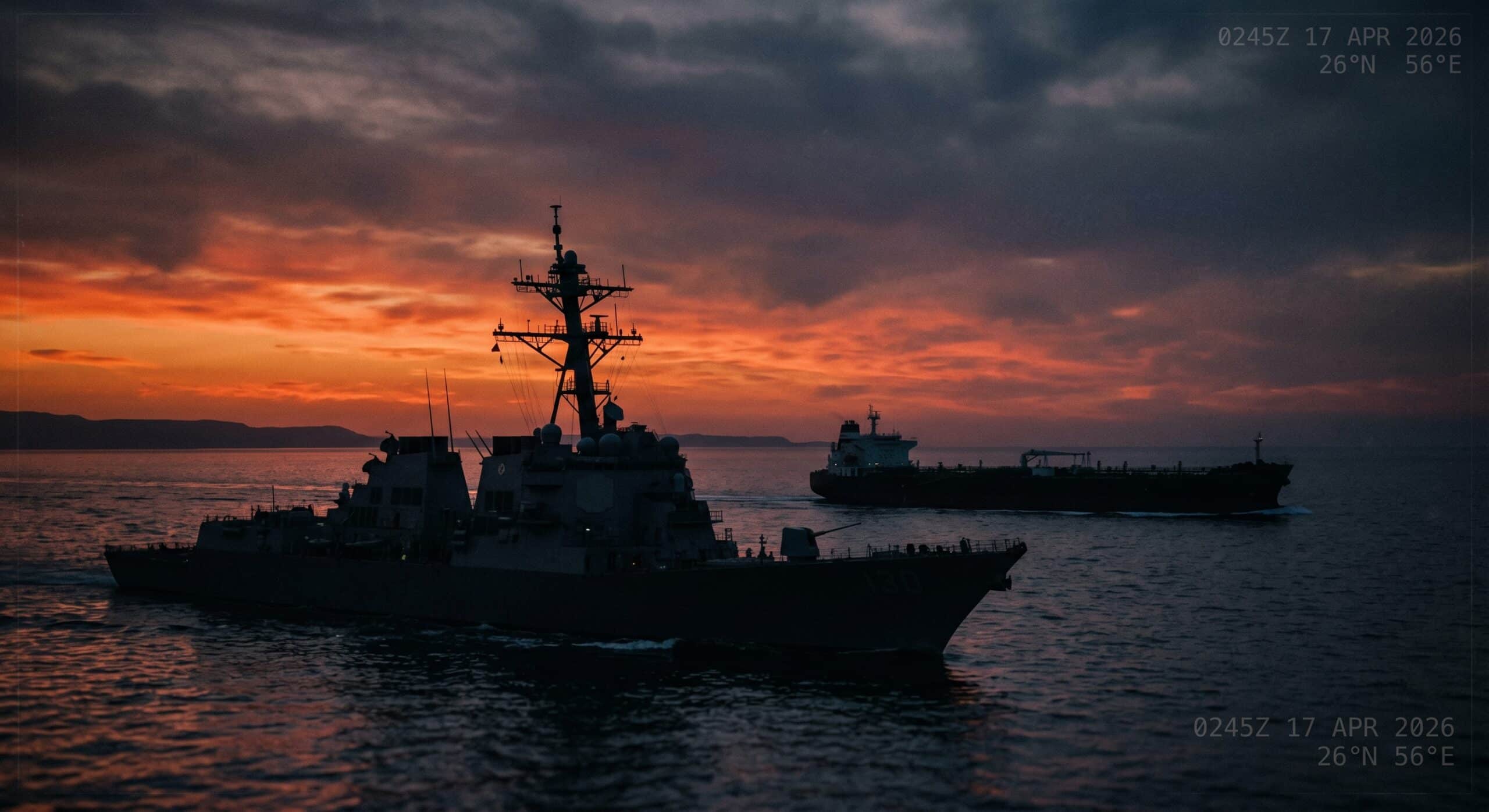
The Trump Iran blockade is the most aggressive US naval operation since the Cuban Missile Crisis. Since April 13, the Trump Iran blockade has turned back 23+ ships, seized Iranian cargo vessels, and become the central obstacle in ceasefire negotiations. This guide explains how the Trump Iran blockade operates, why it was imposed, Iran’s response including ship seizures and the Hormuz re-closure, legal questions about the blockade’s status, and what the Trump Iran blockade means for oil prices, peace talks, and the US midterm elections.
Trump Iran Blockade Explained: How the Naval Blockade Works and What It Means
The Trump Iran blockade has become the central pressure point in the 2026 US-Iran conflict. On April 13, President Trump announced that the US Navy would blockade Iranian ports, preventing ships from entering or leaving Iran through the Strait of Hormuz. The Trump Iran blockade represents one of the most aggressive American naval operations since the Cuban Missile Crisis and has become the primary lever in ongoing ceasefire negotiations.
This article explains what the Trump Iran blockade entails, how it operates, its legal basis, what effect it is having on Iran, and how it connects to the broader ceasefire talks.
What Is the Trump Iran Blockade?
The Trump Iran blockade is a US naval operation that prevents commercial vessels from entering or leaving Iranian ports. According to US Central Command (CENTCOM), the blockade specifically targets ships traveling to or from Iran, while maintaining freedom of navigation for vessels transiting the Strait of Hormuz to other destinations like Saudi Arabia, UAE, Qatar, Kuwait, Bahrain, Iraq, and Oman.
Trump Iran Blockade: Key Facts
- Start date: April 13, 2026
- Ships deployed: 19 US Navy ships in the Middle East, including 2 aircraft carriers, plus 7 ships in the Indian Ocean
- Ships turned back: 23+ vessels as of April 19
- Ships boarded/seized: Multiple, including Iranian-flagged cargo vessels carrying oil
- Scope: All ships entering or leaving Iranian ports
- Exception: Non-Iranian traffic through Hormuz is theoretically unaffected
How the Trump Iran Blockade Operates
The US Navy enforces the Trump Iran blockade through a combination of surveillance, interception, and physical boarding. The operation involves several layers:
Surveillance
US naval reconnaissance aircraft and satellite systems monitor all vessel movements in the Persian Gulf, Strait of Hormuz, and Gulf of Oman. Ships approaching Iranian ports are identified and tracked using their Automatic Identification System (AIS) transponders, radar, and visual confirmation. Our maritime tracker shows publicly available AIS data from this area.
Interception
When a vessel is identified as heading to or from an Iranian port, US Navy destroyers and patrol ships radio the vessel with instructions to change course. According to CENTCOM, 23 ships have complied with these directions and turned around since the blockade began.
Boarding and Seizure
Ships that do not comply with turn-back orders may be boarded by US Navy or Coast Guard teams. The US has boarded and seized multiple vessels carrying Iranian oil, including an Iranian-flagged cargo ship in the Gulf of Oman. The seizure of this vessel reportedly threw a second round of ceasefire talks into doubt, with Iran condemning it as an act of piracy.
Mine Countermeasures
Alongside the blockade, the US Navy is conducting mine clearance operations in the Strait of Hormuz. Two US destroyers, the USS Frank E. Peterson and USS Michael Murphy, transited the strait as part of mine clearance efforts — though Iran denied they entered the strait and threatened retaliation.
Why Trump Imposed the Iran Blockade
The Trump Iran blockade was imposed after the failure of the Islamabad peace talks in mid-April. The administration’s stated objectives include:
- Economic pressure: Cutting off Iran’s remaining export revenue to force concessions in ceasefire negotiations. Iran’s oil exports were already severely reduced by the war, but the blockade aims to eliminate them entirely
- Hormuz control: Establishing US naval dominance over the strait after Iran attempted to charge tolls of over $1 million per ship for passage — a move the US rejected
- Mine clearance: Creating security conditions for safe mine clearance operations in the strait
- Negotiating leverage: Using the blockade as leverage in peace talks — the US has indicated it will lift the blockade only as part of a comprehensive deal
Iran’s Response to the Trump Iran Blockade
Iran has responded to the Trump Iran blockade with a combination of diplomatic protest and military action:
- “Act of war” declaration: Iranian Foreign Minister Abbas Araghchi described the blockade as an “act of war” and a violation of the ceasefire terms
- Ship seizures: The IRGC seized at least two container ships and fired on a third in the Strait of Hormuz, in what Iran described as enforcement of its own control over the waterway
- Re-closing Hormuz: After briefly reopening the strait for commercial traffic on April 17, Iran reversed course on April 18, citing the US blockade as a “breach of trust”
- Toll collection: Iran reportedly received its first revenue from tolls imposed on ships passing through the strait — a move Trump said amounted to “blackmail”
- Refusing negotiations under pressure: Iran has stated it will not negotiate “under the shadow of threats” while the blockade remains in place, creating a diplomatic deadlock
Trump Iran Blockade: Legal Questions
The legality of the Trump Iran blockade is contested. Under international law, a naval blockade is traditionally considered an act of war. The US has not formally declared war on Iran, and the current operations are being conducted under executive authority rather than a congressional declaration of war.
The Trump administration has framed the operation not as a formal “blockade” (which has specific legal implications under international humanitarian law) but as an enforcement of sanctions and freedom of navigation operations. This distinction matters legally but has limited practical significance — the effect is the same: ships cannot reach Iranian ports.
Iran has argued that the blockade violates the terms of the ceasefire agreed on April 8, which Iran understood to include cessation of economic warfare. The US position is that the ceasefire covers kinetic military operations (bombing, missile strikes) but not economic pressure measures.
Impact of the Trump Iran Blockade
On Iran
The blockade has severely constrained Iran’s remaining economic activity. Oil exports, already reduced by war damage to infrastructure, have been nearly eliminated. Import of critical supplies including food, medicine, and industrial materials has been disrupted. The humanitarian implications are significant and have drawn criticism from international organizations.
On Oil Markets
Paradoxically, the blockade has contributed to keeping oil prices elevated even during the ceasefire. While the blockade targets only Iranian-bound vessels, the general instability and the risk of escalation have kept war risk insurance premiums high for all Hormuz traffic. Brent crude remains above $100 per barrel. See our gas prices analysis for consumer impact.
On Ceasefire Talks
The blockade has become the central obstacle in peace negotiations. Iran insists the blockade must end before meaningful talks can proceed. The US insists the blockade will only end as part of a comprehensive deal. This creates a chicken-and-egg problem that negotiators have so far been unable to resolve. Trump has said there is “no time frame” for ending the blockade or the war.
What Comes Next
The Trump Iran blockade is expected to continue until either a comprehensive peace deal is reached or the diplomatic situation changes fundamentally. Key factors to watch include whether a second round of talks in Islamabad materializes, whether Iran escalates its Hormuz actions beyond ship seizures, and whether domestic US political pressure (with midterms approaching) forces a change in strategy.
Monitor the blockade situation in real time on our maritime tracker, track military developments on our 3D strike map, and read the latest analysis in our daily SITREPs.
Monitor the Blockade Live
Real-time ship tracking, Hormuz status, and conflict dashboard.
Open Maritime Tracker →