
Gas Prices Iran War: Why Fuel Costs Surged 38% and When Prices Will Drop
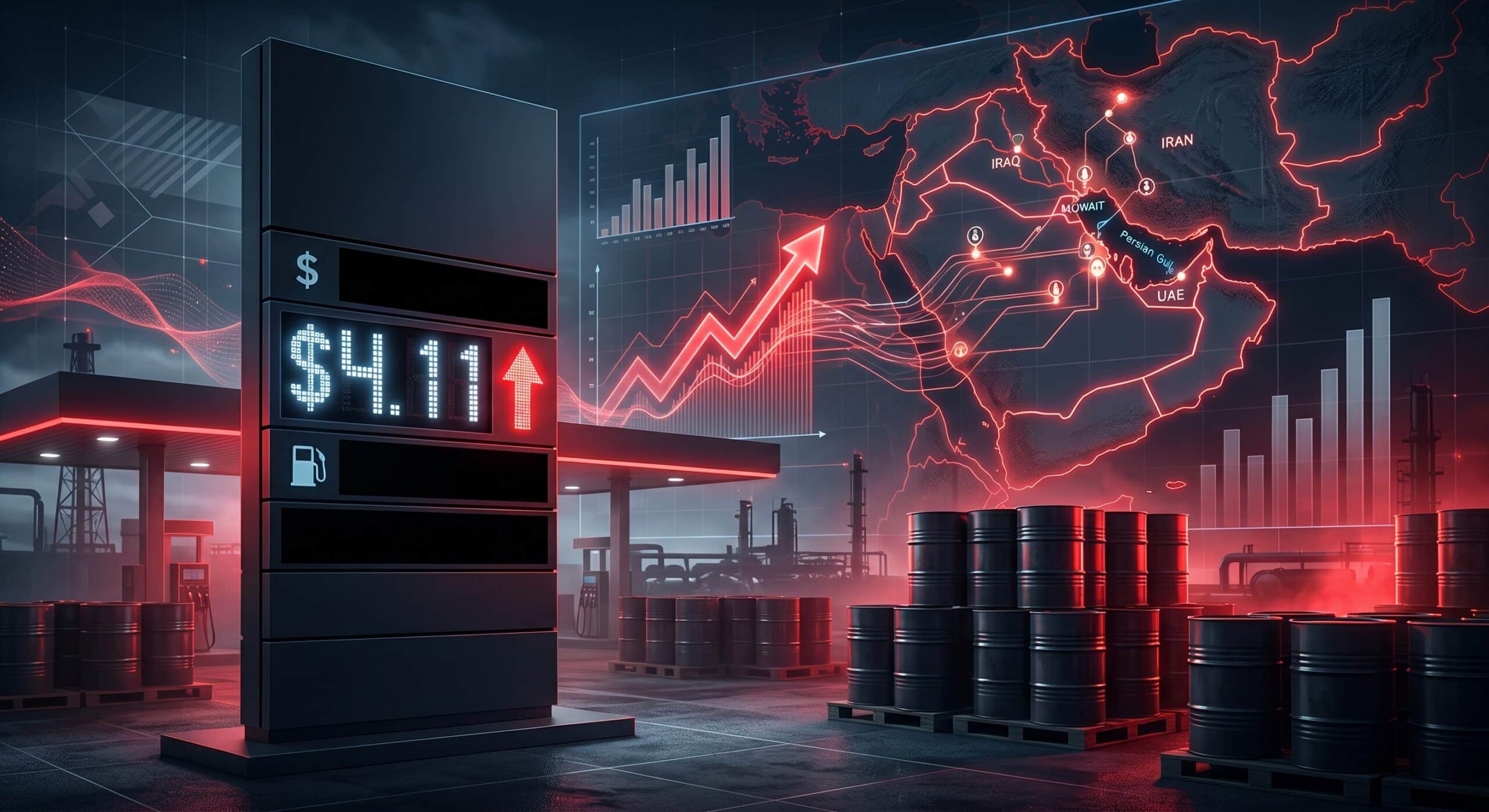
Gas prices and the Iran war are now inseparable topics for American consumers. Since the US-Israeli strikes on Iran began on February 28, 2026, the national average gasoline price has climbed from $2.98 per gallon to over $4.11 — a 38% increase in less than two months. Diesel has been hit even harder, surging 49% to $5.62 per gallon. For millions of Americans, the gas prices Iran war connection is felt every time they fill up their tank.
This article explains exactly why the Iran war caused gas prices to spike, how high they could go, when they might come back down, and what factors to watch.
Current US National Average
Why Gas Prices Rose Because of the Iran War
The connection between gas prices and the Iran war comes down to one waterway: the Strait of Hormuz. Approximately 20% of the world’s seaborne oil passes through this narrow passage between Iran and Oman. When Iran closed the strait in retaliation for the US-Israeli strikes, it removed roughly 20 million barrels per day of oil transit capacity from global markets.
Even though the United States produces most of its own oil domestically, American gas prices are still tied to global crude oil prices. When Brent crude surged from $72 per barrel to nearly $120 — a 55% increase — that price increase rippled through to American gas stations within days.
The Chain Reaction
- Feb 28: US-Israeli strikes begin → oil markets spike on uncertainty
- Mar 2: Iran closes Strait of Hormuz → 20% of global oil supply cut off
- Mar 9: Brent crude hits $120/barrel → gas prices cross $3.50/gallon
- Mar 18: Iran strikes Qatar’s LNG facility → gas and energy prices surge further
- Mar 31: US gas prices hit $4/gallon for first time since 2022
- Apr 8: Ceasefire announced → oil briefly dips below $100 → gas prices stabilize
- Apr 18: Iran re-closes Hormuz → oil surges back above $100 → gas prices climb again
How High Could Gas Prices Go?
The trajectory of gas prices depends entirely on the Iran war’s resolution and the Strait of Hormuz status. Analysts have outlined several scenarios:
Gas Price Scenarios
- Best case (ceasefire holds, Hormuz reopens): Prices ease to $3.30-3.50/gallon by summer, returning toward $3.00 by year-end. The Energy Information Administration projects $3.34 average for 2026 if transit resumes
- Base case (stalemate, partial Hormuz access): Prices stay in the $3.80-4.50 range through the midterm elections. Pentagon estimates it could take 6 months to clear Hormuz mines even after fighting stops
- Worst case (war escalates, Hormuz stays closed): Brent crude hits $150+ per barrel. Gas prices could reach $5.50-6.00/gallon nationally. Analysts at major banks have warned that sustained Hormuz closure could trigger a global recession
Why US Gas Prices Rise Even Though America Produces Its Own Oil
This is one of the most common questions about gas prices and the Iran war. The US is a net energy exporter — it produces more oil than it consumes. So why do American gas prices spike when a Middle Eastern waterway closes?
The answer is that oil is a globally traded commodity. US crude oil (West Texas Intermediate) is priced relative to global benchmarks like Brent crude. When global supply drops by 20%, the price rises everywhere — including for domestically produced oil. American oil producers sell at global market prices, not at a discounted domestic rate.
Additionally, diesel prices are particularly affected because refined diesel is traded internationally and the US both imports and exports diesel products. When global supply chains tighten, diesel costs spike faster than gasoline.
Gas Prices Iran War: What About Diesel and Food Costs?
The gas prices Iran war impact extends far beyond the pump. Diesel is the fuel that moves the American economy — trucks, trains, construction equipment, and agricultural machinery all run on diesel. When diesel prices surge 49%, those costs ripple through everything:
- Food prices: An estimated 10% increase in diesel translates to roughly 0.1% increase in the consumer price index. With diesel up 49%, grocery prices are expected to rise 3-5% by summer
- Shipping costs: Freight rates have increased as trucking companies pass diesel costs to customers
- Construction: Building projects face higher material transport costs
- Agriculture: Planting season costs are up significantly, with fertilizer prices also affected by the Hormuz closure (Qatar is a major fertilizer producer and its LNG facility was damaged)
When Will Gas Prices Come Down?
According to energy analysts, gas prices will start declining when one or more of these conditions are met:
- Strait of Hormuz fully reopens — This would immediately release 20% of global oil supply back into the market. But the Pentagon estimates it could take 6 months to clear Iranian mines even after a peace deal
- Comprehensive ceasefire with Iran — A deal that includes Hormuz reopening would cause oil prices to drop $10-20 per barrel almost immediately. But the ceasefire talks remain stalled
- Strategic reserve releases — Countries like the US, Japan, and South Korea have released strategic oil reserves to soften the impact. Japan released 80 million barrels in March. But these reserves are limited
- Alternative supply routes — Oil that normally transits Hormuz can be partially rerouted through pipelines and alternative ports (like Oman’s Duqm port), but at much lower volumes and higher costs
The most likely timeline for meaningful gas price relief is 3-6 months after a comprehensive peace deal, according to economists at major insurance and consulting firms. As one analyst noted, prices go up like rockets but come down like feathers — even if oil prices drop tomorrow, gasoline prices take weeks to months to follow due to refinery supply chains.
Gas Prices Iran War: Political Impact
Gas prices have historically been one of the most politically sensitive economic indicators in American politics. The 2026 midterm elections in November are approaching, and the Trump administration faces increasing pressure as voters feel the war’s impact at the pump every day. Trump has said the prices are a “small price to pay” for the Iran operation, but polling suggests Americans are increasingly concerned about the economic cost of the conflict.
The political dynamic creates additional pressure for a negotiated resolution. Every week that gas prices stay above $4 per gallon increases public pressure on the administration to reach a deal with Iran — which may ultimately be the most important factor in when prices come down.
How to Track Gas Prices and the Iran War
Monitor the key factors that drive gas prices:
- War Intel Hub Homepage — TradingView ticker showing live crude oil prices, plus Hormuz status and conflict dashboard
- Maritime Tracker — Watch real-time ship movements in the Strait of Hormuz. More ships transiting = prices easing
- Daily SITREP Reports — Our daily intelligence briefings cover market impact in every report
- Oil Price Impact Analysis — Detailed breakdown of crude oil, LNG, gold, and currency movements
Track Oil Prices and Hormuz Status Live
Real-time crude oil prices, Hormuz shipping activity, and conflict dashboard.
Open War Intel Hub →