
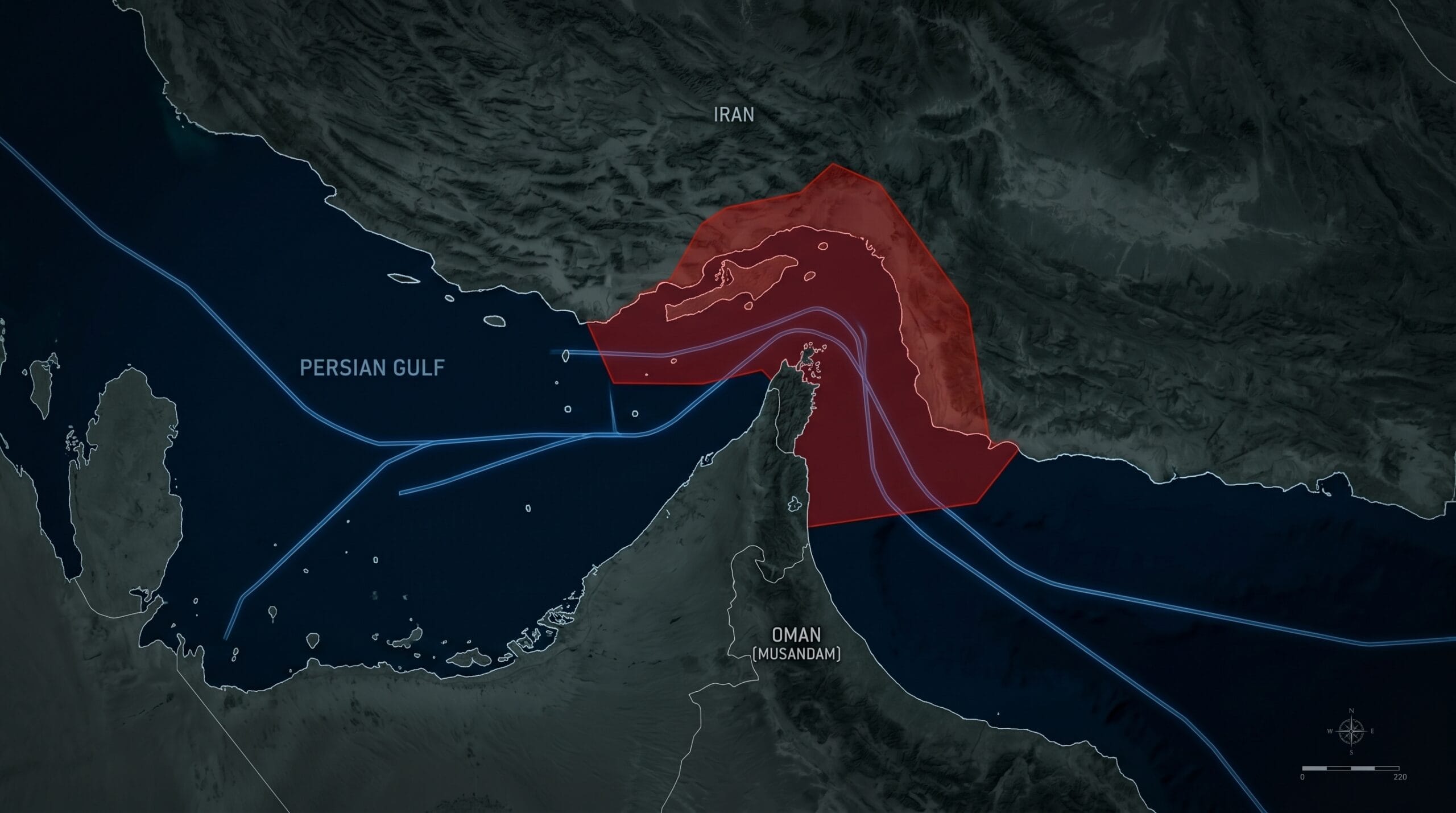
What Is the Strait of Hormuz? Why It Controls 20% of Global Oil Supply
The Strait of Hormuz is the most important oil chokepoint in the world. This narrow waterway between Iran and Oman connects the Persian Gulf to the Gulf of Oman and the open ocean beyond. When Iran closed the Strait of Hormuz in March 2026 following US-Israeli military strikes, global oil prices surged past $120 per barrel and shipping insurance premiums skyrocketed. On April 17, 2026, Iran declared the Strait of Hormuz “completely open” again as ceasefire negotiations progressed.
But what exactly is the Strait of Hormuz, why does it matter so much to the global economy, and what happens when it closes? This guide covers everything you need to know.
Where Is the Strait of Hormuz Located?
The Strait of Hormuz is located between Iran to the north and Oman and the United Arab Emirates to the south. It is the only sea passage connecting the Persian Gulf — where most Middle Eastern oil-producing nations are located — to the Gulf of Oman and the wider Indian Ocean.
At its narrowest point, the Strait of Hormuz is only 21 miles (33 kilometers) wide. The shipping lanes in each direction are only 2 miles wide, separated by a 2-mile buffer zone. This makes it one of the most tightly controlled waterways on Earth.
Key Facts: Strait of Hormuz
- Width: 21 miles (33 km) at narrowest point
- Shipping lanes: Two 2-mile-wide lanes (inbound and outbound)
- Oil traffic: ~20-25% of global seaborne oil passes through daily
- LNG traffic: ~20% of global liquefied natural gas
- Daily volume: Approximately 17-21 million barrels of oil per day
- Bordering nations: Iran, Oman, UAE
- Controlled by: Iran claims territorial waters; international law guarantees transit passage
You can monitor the current status of the Strait of Hormuz on our live maritime tracker, which shows real-time vessel positions, port status, and conflict zone overlays.
Why Is the Strait of Hormuz So Important?
The Strait of Hormuz matters because of one thing: oil. The Persian Gulf region contains roughly 30% of the world’s proven oil reserves and 20% of natural gas reserves. Almost all of this energy has to pass through the Strait of Hormuz to reach global markets.
Countries That Depend on the Strait of Hormuz
The nations whose oil exports must transit the strait include Saudi Arabia, Iraq, Kuwait, UAE, Qatar, and Bahrain. These countries collectively produce over 20 million barrels of oil per day. While Saudi Arabia and the UAE have limited pipeline alternatives that bypass the strait, the vast majority of their exports still go through it.
On the receiving end, the countries most dependent on oil passing through the Strait of Hormuz include Japan, South Korea, China, and India — all of which import massive volumes of Gulf crude. European nations also rely heavily on this supply route, particularly for liquefied natural gas (LNG) from Qatar.
What Happens When the Strait of Hormuz Closes?
When Iran closed the Strait of Hormuz in March 2026, the effects were immediate and severe:
- Oil prices surged — Brent crude jumped from approximately $85 to over $120 per barrel within days
- Shipping insurance premiums — war risk premiums increased from 0.125% to over 2% of hull value, making transit economically unviable
- LNG disruption — Qatar, the world’s largest LNG exporter, was unable to ship through the strait, affecting gas supplies to Europe and Asia
- Stock market volatility — energy stocks surged while the broader market dropped on recession fears
- Global inflation pressure — higher energy costs translated into increased transportation and manufacturing costs worldwide
Track the real-time financial impact on our homepage using the live TradingView ticker showing oil, gold, and affected currency prices.
The 2026 Strait of Hormuz Crisis
The latest Strait of Hormuz crisis began on February 28, 2026, when the United States and Israel launched coordinated military strikes against Iran. In retaliation, Iran’s Islamic Revolutionary Guard Corps (IRGC) declared the strait closed to all commercial traffic on March 2, 2026.
During the closure, the IRGC launched confirmed attacks on merchant vessels, reportedly laid sea mines in the strait, and issued warnings forbidding all passage. Major shipping companies including Maersk, MSC, and CMA CGM suspended all operations through the strait. Lloyd’s of London removed war risk insurance coverage, making transit economically impossible even without a physical blockade.
On April 17, 2026, Iranian Foreign Minister Abbas Araghchi announced that the Strait of Hormuz was “completely open” for commercial vessels, coinciding with a ceasefire in Lebanon and ongoing US-Iran negotiations. Iran also reportedly agreed to “never close the Strait of Hormuz again,” though the US naval blockade of Iranian ports remained active at time of writing.
View our 3D strike map for a complete visualization of the conflict, including strike locations, attack vectors, and the Hormuz theater.
History of Strait of Hormuz Tensions
The 2026 crisis is not the first time the Strait of Hormuz has been threatened. Iran has used the strait as leverage in geopolitical disputes for decades:
- 1988 — Operation Praying Mantis: The US Navy engaged Iranian forces in the strait after an American frigate hit an Iranian mine
- 2011-2012: Iran threatened closure in response to Western sanctions over its nuclear program, causing oil prices to spike
- 2019: Iran seized the British-flagged tanker Stena Impero and attacked multiple commercial vessels in the strait, leading to a multinational naval escort mission
- February 2026: Iran briefly partially closed the strait as a warning before the full closure following US-Israeli strikes
Can Iran Actually Close the Strait of Hormuz?
This is the key strategic question. Iran’s ability to close the Strait of Hormuz depends on several factors:
Iran’s capabilities: The IRGC Navy operates fast attack boats, anti-ship missiles, naval mines, and shore-based missile batteries along Iran’s coastline. Iran also has submarine capabilities. These forces are designed specifically for asymmetric warfare in the narrow waters of the strait.
US response capability: The US 5th Fleet, based in Bahrain, maintains a constant presence in the region specifically to keep the strait open. The US Navy can conduct mine-clearing operations, escort commercial vessels, and neutralize Iranian coastal defenses — but this takes time and resources.
Economic reality: Iran doesn’t need to physically block every ship. Simply threatening attacks and creating insurance risk is enough to halt commercial traffic. When Lloyd’s pulls war risk coverage, no shipping company will transit the strait regardless of military protection. This is exactly what happened in March 2026.
Strait of Hormuz Current Status
As of April 18, 2026, the Strait of Hormuz has been declared open by Iran for commercial vessel traffic. However, the situation remains fluid as the US naval blockade of Iranian ports continues and ceasefire terms are still being negotiated.
Our platform monitors the Strait of Hormuz status in real-time across multiple pages:
- Maritime Tracker — live AIS vessel data, port status, and shipping lane activity
- Homepage Dashboard — Hormuz status indicator updated automatically every 15 minutes from news sources
- 3D Strike Map — conflict visualization including the Hormuz theater
- Air Traffic Monitor — airspace activity over the Persian Gulf region
Track the Strait of Hormuz Live
Monitor real-time ship movements, port status, and conflict zone activity in the Hormuz strait.
Open Maritime Tracker →How Does the Strait of Hormuz Affect Oil Prices?
The relationship between the Strait of Hormuz and oil prices is direct and immediate. Any disruption — even a threatened disruption — causes oil futures to spike within hours. During the 2026 closure, Brent crude rose roughly 40% from pre-crisis levels.
The price impact extends beyond oil itself. Higher crude prices increase costs for transportation, manufacturing, agriculture, and virtually every sector of the global economy. Central banks face pressure to raise interest rates to combat energy-driven inflation, which can trigger recessions.
For investors and traders, the Strait of Hormuz is arguably the single most important geopolitical variable affecting energy markets. Understanding its status is essential for making informed decisions about energy stocks, commodity futures, and currency positions in oil-dependent economies.
Key Takeaways
The Strait of Hormuz remains the world’s most critical energy chokepoint. Its closure in 2026 demonstrated exactly how vulnerable the global economy is to disruptions in this narrow waterway. While the strait has been reopened, the underlying geopolitical tensions between Iran, the United States, and Israel continue to evolve.
Stay informed by following our daily SITREP reports and monitoring the live maritime tracker. You can also subscribe to our daily intelligence briefing for email updates delivered at 0600 UTC.